02 · AboutBorn 25 September 1963, MumbaiChairman & Managing Director
The man behind the hoardings.
Dr. Yogesh Jiwanlal Lakhani has spent his entire working life in one
industry, in one city, doing one thing better each decade than he did it the
decade before. This is the account of it, assembled from published interviews,
company statements and press reporting.
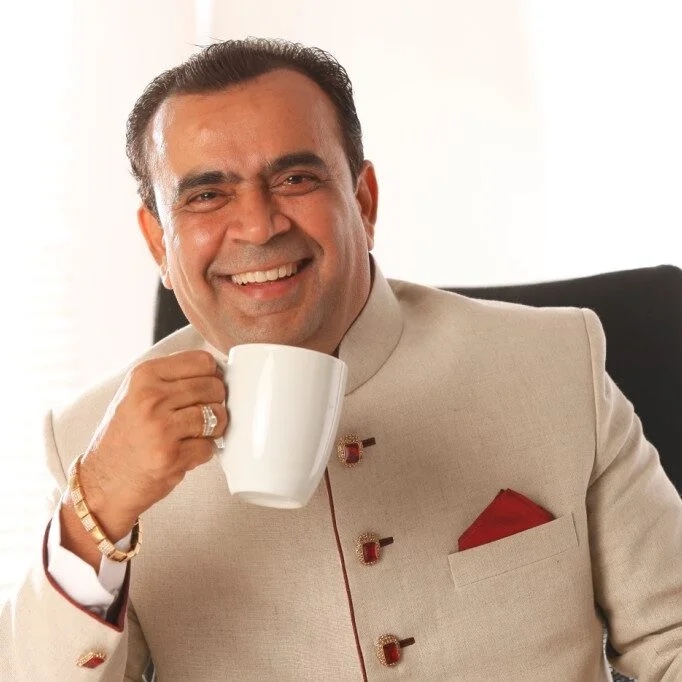
Pl. 01Dr. Yogesh Lakhani. He has said publicly that he takes no alcohol, tea or coffee — a discipline he attributes to wanting to set an example.
i · Origins
A Mumbai childhood, counted in small jobs.
Yogesh Lakhani was born in Mumbai on 25 September 1963, into a
Saurashtrian family living in cramped circumstances. Money was short
enough that he worked as a boy — selling newspapers, and selling
firecrackers in season — to add to what the household had. In
interviews he has described a childhood in which the cost of hospital
bills was a real and present problem.
Two things from those years carried forward. The first was cinema: he
loved films, and the film industry would later become both his customer
and his social world. The second was a habit of work that he has never
since put down. He did not go on to a management degree; press profiles
note, with some relish, that his company is now studied in MBA
classrooms by students better credentialled than he is.
ii · Learning the trade
1980: a delivery boy carrying slides between theatres.
He finished his S.S.C. examinations and went straight to work. His first
job, in 1980, was as a slide delivery boy — moving the glass and
acetate advertising slides that were projected in cinemas before the
feature. The work widened into what the industry then called
“fixing”: putting up banners, installing railway boards,
being the person on the ladder rather than the person on the phone.
It is an unglamorous apprenticeship and he has never disguised it. It
also taught him the physical reality of the medium — which walls
take a board, which sightlines actually work, how long a surface lasts
through a monsoon — knowledge that later let him buy and build
sites with more confidence than a purely commercial operator could.
iii · Building the company
One table, one member of staff, and the suburban railway.
By 1990 he had rented a table in an office and hired one person. In 1991
he began taking sites on a sub-letting basis — the standard way into
the trade for someone without capital. In 1992 he secured the hoarding
rights at Kandivali, Borivali and Andheri railway stations, and opened a
small office of his own in Borivali. Those two moves, taken together, are
the point at which he stopped being a contractor and started being an
owner.
By 1995 he had developed roughly two hundred hoardings across railway
locations and had begun moving into road sites; the company took a larger
office in Borivali. In his own description of this period, that was
“the real journey” of Bright Outdoor Media beginning. A
professional team was built up around him, and operations were later
extended to Pune, Bangalore and Hyderabad.
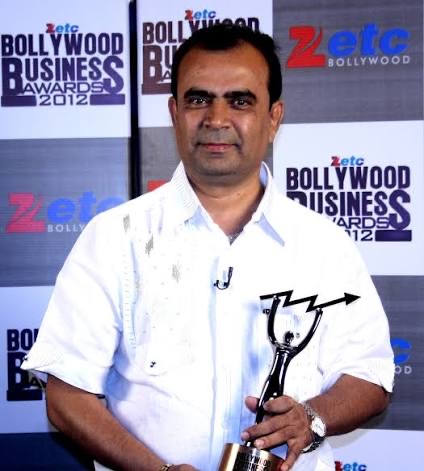
Pl. 02Zee ETC Bollywood Business Awards, 2012. Recognition from the film industry arrived early and has continued.
iv · The company today
From hoardings to a listed business.
Bright Outdoor Media Limited now describes itself as a full-spectrum
out-of-home and digital out-of-home business: billboards and hoardings,
transit media across BEST buses, the monorail, the metro, the railways
and MMRDA sites, mall and multiplex advertising, cinema branding, events
and activations, and allied services. The company states more than 1,200
premium sites across Mumbai and other metros, and over 5,000 corporate
clients.
Two projects stand out in its own account of itself. In 2017 it installed
a 120 ft × 80 ft billboard at the Bandra road-over-bridge,
which it describes as Asia’s largest hoarding. And through a joint
venture partner it holds Guinness World Records associated with
solar-panelled billboards — the beginning of a shift of its
inventory towards solar power.
On 24 March 2023 Bright Outdoor Media Limited listed on the BSE SME
platform, becoming the first out-of-home media company in India to be
listed on a stock exchange. The company has since said it is working
towards a migration to the BSE Main Board. Its promoters are Yogesh
Jiwanlal Lakhani and Jagruti Yogesh Lakhani.
v · The person
Family, faith and a set of refusals.
He is married to Jagruti Lakhani, who is a promoter of the company and
serves as a Whole Time Director; they have a son, Anugrah. He is a
practising Jain, and has spoken of his association with the Jain and
allied spiritual communities as a steadying influence.
He abstains completely from alcohol — and, unusually, from tea and
coffee as well. He has been explicit about why: he does not want to
recommend a path he is not himself walking. When his mother, Kusumben
Jeevanlal Lakhani, died, she donated her eyes and skin; he has spoken of
that decision as the family’s standard rather than an exception.
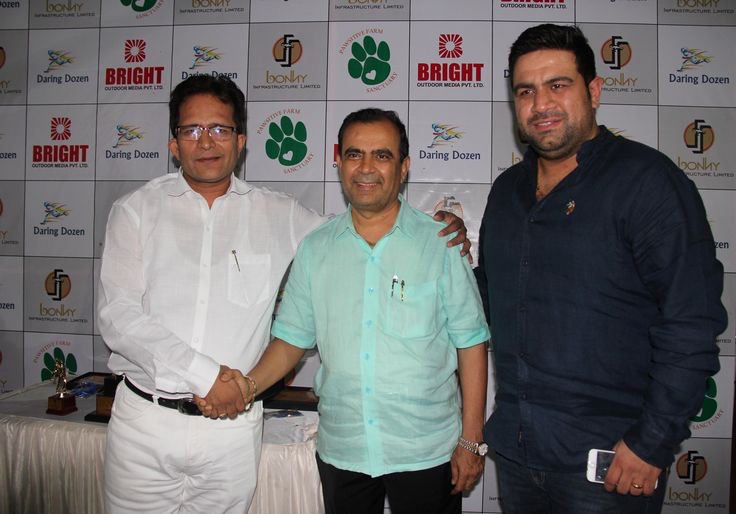
Pl. 03At a Mumbai industry event. Much of the business has always been conducted face to face.
vi · At a glance
The record, in brief.
Full name
Dr. Yogesh Jiwanlal Lakhani
Born
25 September 1963, Mumbai, India
Role
Chairman & Managing Director, Bright Outdoor Media Limited
In the industry since
1980
Honorary doctorates
Sorbonne University, France (business management); Royal American University, USA (social service)
Company listing
BSE SME platform, 24 March 2023 — a first for Indian out-of-home media
Family
Wife, Jagruti Lakhani; son, Anugrah
Based in
Mumbai, Maharashtra
A note on sourcing
Dates, figures and quotations on this page are taken from Bright Outdoor
Media’s own published material and from interviews and reports in the
trade and general press. Where published accounts differ — the
company’s founding is variously dated to the start of his career in
1980 and to its later incorporation — this site follows the
company’s own statement and says so. Claims that could not be
verified have been left out.