01 Opening · Mumbai, India
Forty-five years spent making other people visible.
Dr. Yogesh Lakhani entered out-of-home media in 1980, carrying cinema slides between Mumbai’s theatres. He is today Chairman and Managing Director of Bright Outdoor Media Limited — the first out-of-home media company in India to list on the Bombay Stock Exchange.
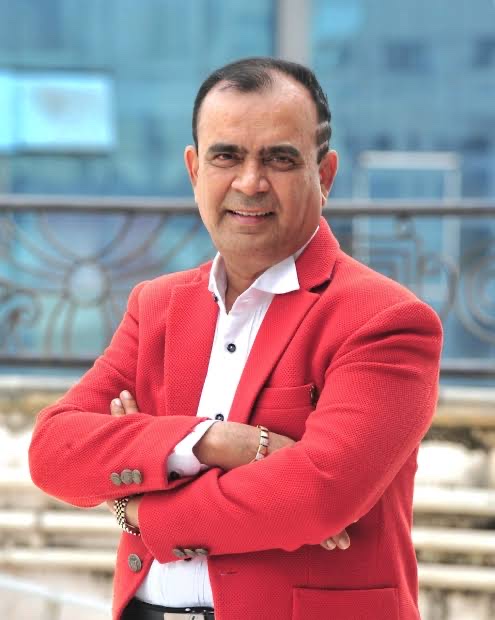
A career made in the open air of a city that never stops looking up.
Out-of-home advertising is the least private medium there is. A hoarding cannot be skipped, closed or scrolled past; it stands in the weather, in full public view, answerable to everyone who passes it. Yogesh Lakhani has spent his working life inside that medium — first as the boy who carried the slides, then as the man deciding what a large part of Mumbai would see.
He was born in Mumbai on 25 September 1963 into a Saurashtrian household of modest means. As a boy he sold newspapers and firecrackers to help the family, and grew up in love with cinema. He took no MBA. What he learned, he learned standing in front of the sites themselves — how a location behaves at different hours, what a passing eye actually registers, and why a client remembers the person who answered the phone more clearly than the person who quoted the lowest rate.
From a single rented table and one member of staff, Bright Outdoor Media grew into a company with premium inventory across Mumbai and other Indian metros, transit contracts on the city’s buses, monorail, metro and railways, and a client list the company numbers in the thousands. In March 2023 it did something no Indian out-of-home business had done before: it listed on the Bombay Stock Exchange.
Alongside the business runs a second, quieter record — a free dialysis centre, blood donation drives, food and books for people who need them, and a decision in recent years to spend the budget of his own birthday celebration on institutions serving the blind, the specially-abled, orphans and the elderly instead.
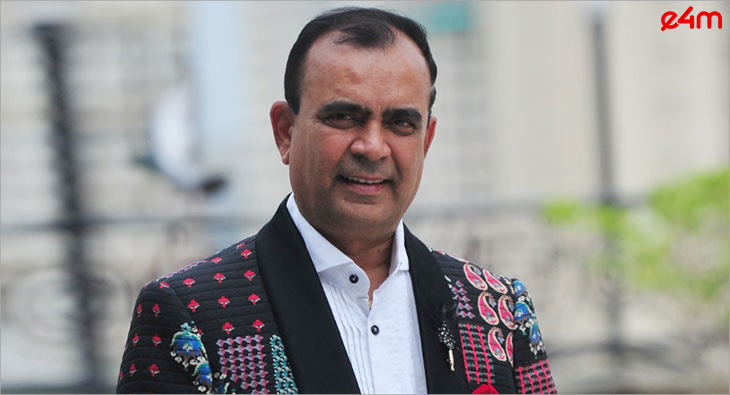
He did not inherit a position. He accumulated one, site by site.
There is no single dramatic turn in this story — no windfall, no rescue, no famous surname. There is a boy delivering cinema slides in 1980; a young man sub-letting his first sites in 1991; a small office in Borivali in 1992; roughly two hundred railway hoardings developed by 1995; then road sites, transit media, digital screens, a listed company, and a place at the head of an industry he entered at the very bottom of.
What defines it is compounding, not luck. Each stage paid for the next one. That is the argument this website sets out to make — not that he rose quickly, but that he never stopped.
Five stages, each one funded by the last.
- 01 Beginning 1980 – 1990 Cinema slides, banner fixing and railway board installation — the trade learned from the pavement up.
- 02 Evolution 1991 – 1999 Sub-let sites, then suburban railway hoardings, a first office in Borivali and roughly 200 sites by 1995.
- 03 Leadership 2000 – 2016 Road and transit media, national award-show campaigns, and expansion beyond Mumbai.
- 04 Perspective 2017 – 2023 Asia’s largest hoarding at Bandra, solar-powered sites, and a listing on the Bombay Stock Exchange.
- 05 Impact 2024 – today Digital screens, a proposed move to the BSE Main Board, and a widening programme of giving.
Leadership
“Success does not lie in results but in efforts, being the best is not important, doing the best is all that matters.”
Dr. Yogesh Lakhani · birthday interview, Bollyy, 2021
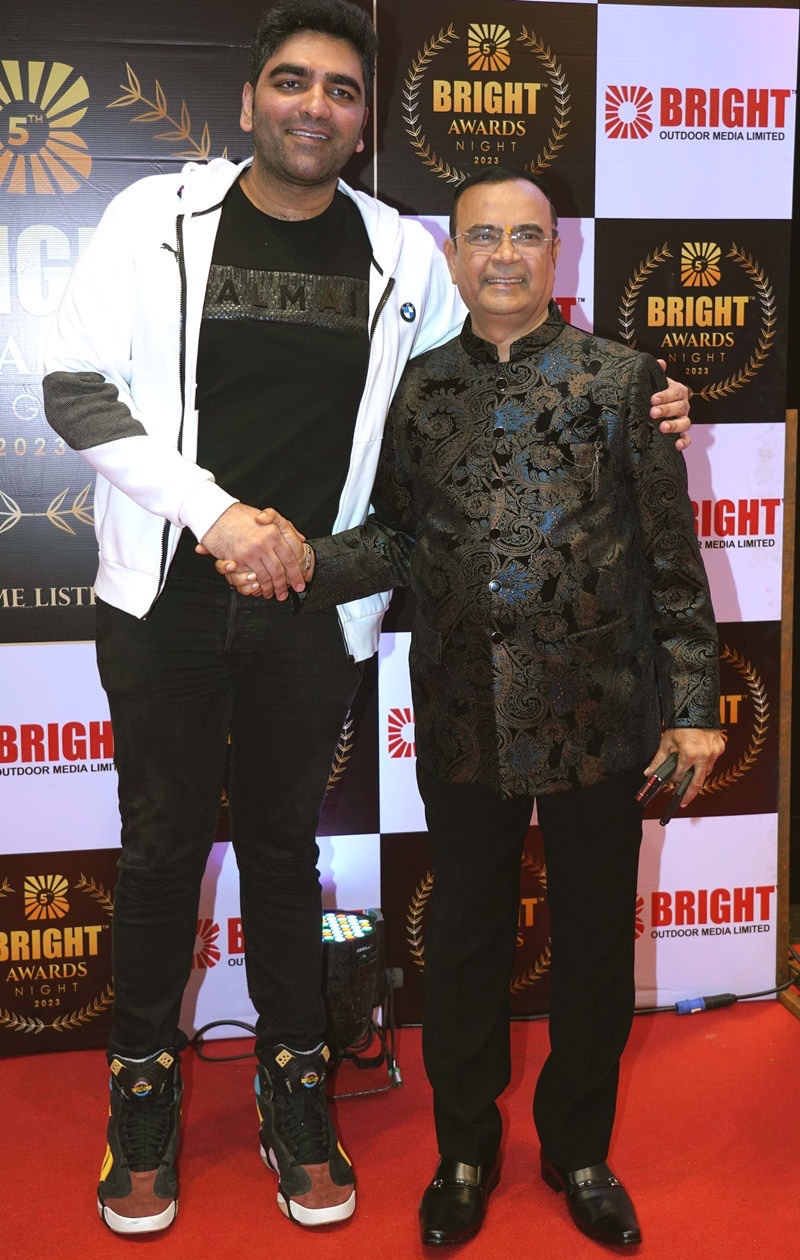
What the business pays for, beyond the business.
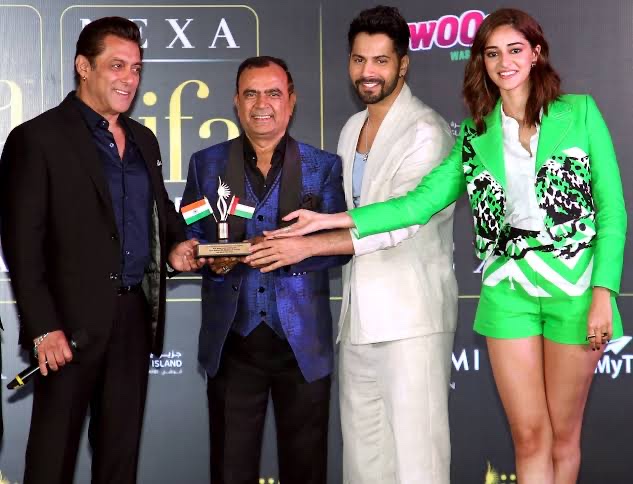
- A free dialysis centre
- Established for patients who cannot meet the cost of treatment — the initiative most consistently cited in reporting on his philanthropy.
- Healthcare
- Blood donation drives
- Regularly organised and supported, continuing a family commitment to donation that his mother extended to her eyes and skin.
- Public health
- Food and books
- Meals for people in need, and school books distributed to students who cannot afford them.
- Welfare & education
- A birthday spent elsewhere
- In recent years the budget of his own celebration has been directed instead to institutions serving blind and specially-abled people, orphanages and homes for the elderly.
- Community
The work is public. So is the record.
Everything on this site is drawn from published sources, company statements and photographs. Read whichever part of it you came for.